Three Myrtle Beach Prints That Tell a Bigger Story
By Deacon Dawson Art ·
Build a Myrtle Beach collection around Studebaker’s, the Myrtle Beach Pavilion, and the old Train Depot—three landmarks that make a more personal wall together.
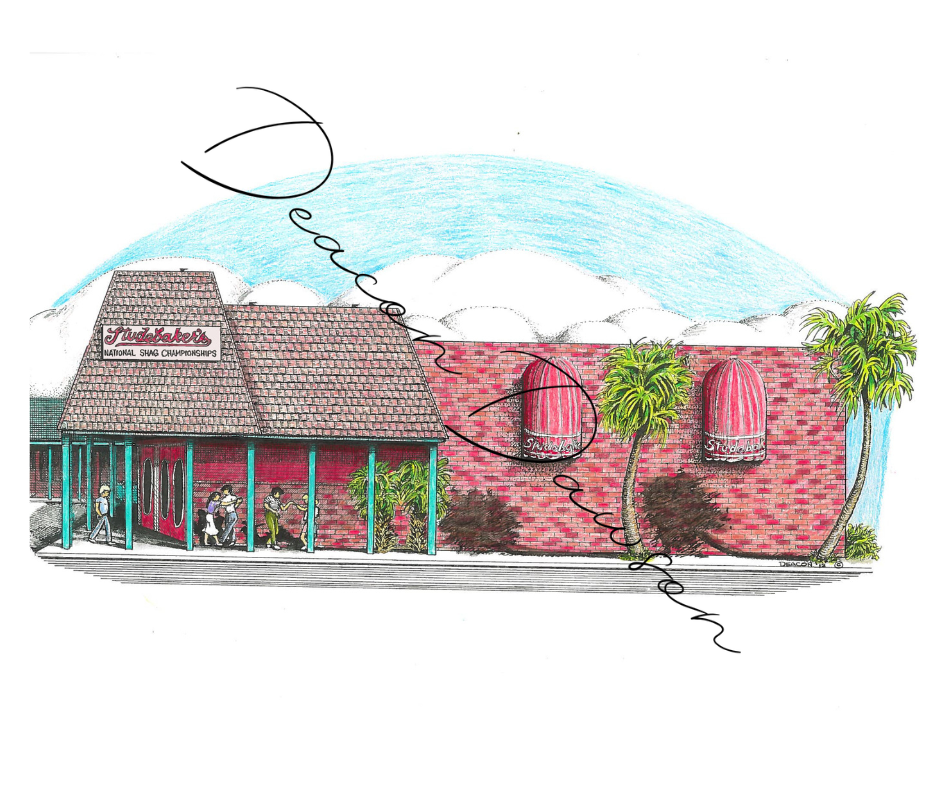
A three-print Myrtle Beach collection can tell more of the Grand Strand story than one image alone. Deacon Dawson’s Studebaker’s Print, Myrtle Beach Pavilion Version 2 Print, and Myrtle Beach Train Depot bring together recognizable places, different moods, and the memories that connect them.
Why choose a set of Myrtle Beach landmark prints?
A single landmark print can stop someone in their tracks: “I remember that place.” A set gives that first reaction somewhere to go. It invites the viewer to move from one picture to the next and connect their own days at the beach, trips downtown, family stories, and changing views of Myrtle Beach.
That is especially true with pen-and-ink art. Deacon Dawson’s line work keeps the focus on the structure, signage, character, and visual details that make a familiar place feel familiar. When three hand-signed pen-and-ink prints share a wall, those details create a conversation without needing every picture to come from the same year or tell the same kind of story.
The strongest small collections usually have a simple idea behind them. For this group, the idea is Myrtle Beach as a place people arrived in, spent time in, and remembered long after the trip home. The Train Depot suggests the route in; the Pavilion brings the energy of a well-known beachfront landmark; Studebaker’s adds another unmistakably local stop to the picture.
Which three prints work together for a Myrtle Beach story?
Start with the Myrtle Beach Train Depot. The depot was constructed in 1937 by Myrtle Beach Farms Company, later known as Burroughs and Chapin Co., and turned over to Atlantic Coast Line Railroad Co. on May 6, 1937. In the early years of the Grand Strand, the rails brought goods and supplies along with early visitors, making the building a meaningful choice for anyone interested in how Myrtle Beach grew.
The depot also gives a collection a quieter anchor. Its story is not just about a building; it is about anticipation. A station is where people arrive, where news and supplies come through, and where a place becomes connected to the wider world. By the early 1960s, better roads and air travel had affected the depot’s role, but the image still carries that sense of an earlier Myrtle Beach.
Next, add Myrtle Beach Pavilion Version 2 Print. For many Grand Strand families and visitors, the Myrtle Beach Pavilion name immediately brings up the sound and motion of a day near the oceanfront. Paired with the depot, the Pavilion shifts the collection from the journey to the experience—the part of a Myrtle Beach visit that stays bright in memory.
Then round out the group with Studebaker’s Print. Studebaker’s gives the set a different kind of local recognition. Rather than choosing three versions of the same scene, this selection lets each landmark keep its own personality while still belonging to one Myrtle Beach map of memories.
How does a collection tell a bigger Grand Strand story?
A collection works because the Grand Strand has never been only one landmark. It is a chain of places: destinations people planned for, buildings they passed on the way to the beach, and names that come up when old friends start comparing stories. Putting three landmarks together acknowledges that a personal Myrtle Beach history rarely fits inside one frame.
The story can be shared across generations, too. One person may be drawn to the Myrtle Beach Train Depot because of an interest in local history. Another may choose the Myrtle Beach Pavilion because it reminds them of childhood vacations. Someone else may light up at the sight of Studebaker’s. On the wall, those different connections become part of the same conversation.
This is also a thoughtful direction for a gift. Instead of trying to guess one perfect landmark, choose a group with room for the recipient’s own memories. A three-print collection feels considered without requiring a grand explanation: these are Myrtle Beach places, rendered in Deacon Dawson’s distinctive pen-and-ink style, and they belong together because they mattered to people who spent time here.
Deacon Dawson has called South Carolina’s Grand Strand home since arriving in Myrtle Beach in 1968. His work focuses on landmark structures, past and present, and each Grand Strand print is hand-signed. That personal connection is part of what makes a collection feel less like generic coastal decor and more like a visual record of a place people know.
How should you choose the order for three landmark prints?
There is no required order, but a story-based arrangement is an easy place to begin. Place the Myrtle Beach Train Depot first, followed by the Myrtle Beach Pavilion, then Studebaker’s. Read left to right, the wall moves from arrival to activity to another familiar stop in town.
You can also make the Pavilion the center of the group if it is the landmark that means the most to you. The Train Depot and Studebaker’s can sit on either side as supporting chapters. The goal is not historical perfection; it is to make a grouping that feels right when you walk past it every day.
Keep the collection close together so viewers can take in the relationship among the landmarks. A shared wall in a den, entryway, office, or gathering space gives the three prints a chance to work as one statement. If your home already has Grand Strand photos or souvenirs, this trio can provide the illustrated backbone around which those personal items make even more sense.
Shop the Studebaker’s Print, Myrtle Beach Pavilion Version 2 Print, and Myrtle Beach Train Depot to begin a Myrtle Beach collection with a story behind it.
Common questions
What makes these three Myrtle Beach prints a good collection?
Studebaker’s, the Myrtle Beach Pavilion, and the Myrtle Beach Train Depot represent different parts of a Myrtle Beach experience rather than repeating one scene. Together, the hand-signed pen-and-ink prints create a broader sense of place.
Is the Myrtle Beach Train Depot print based on a historic building?
Yes. The Myrtle Beach Train Depot depicts the station constructed in 1937, which served passenger and freight rail traffic during the early development of the Grand Strand.
Are Deacon Dawson’s Grand Strand prints hand-signed?
Yes. Every Deacon Dawson Grand Strand print is hand-signed by the artist, making each one a direct connection to his ongoing record of local landmarks.