The Pen-and-Ink Details That Keep Grand Strand Places Alive
By Deacon Dawson Art ·
Look closely at three Deacon Dawson landmark prints and see how line, architecture, and local memory bring old Myrtle Beach places back into view.
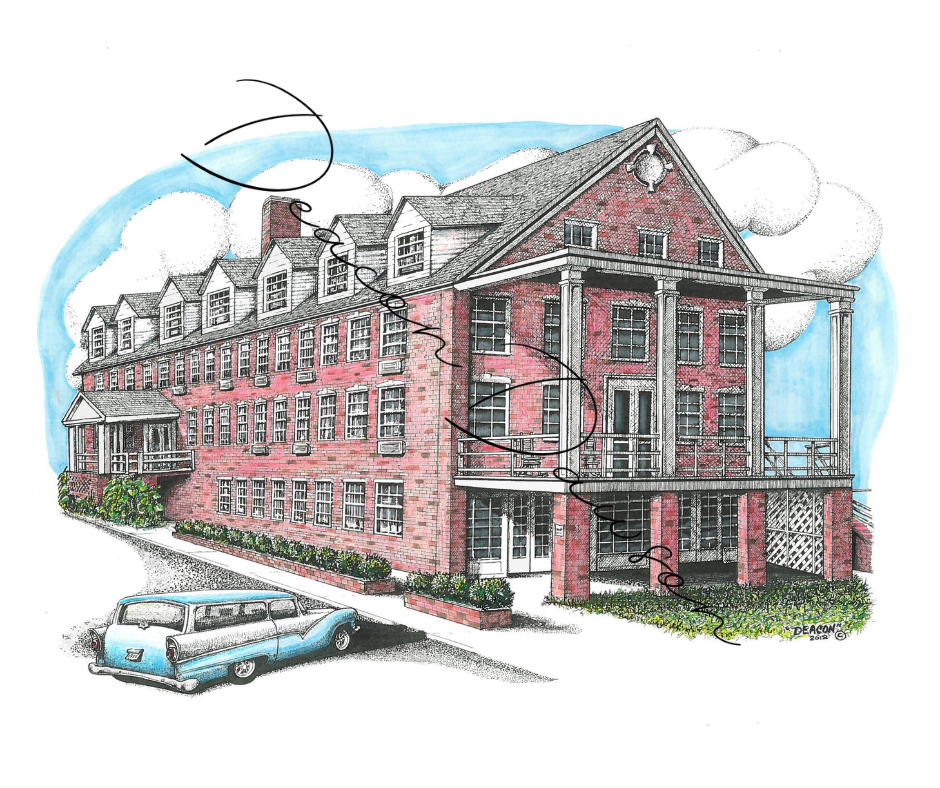
A Deacon Dawson hand-signed pen-and-ink print keeps a familiar Grand Strand landmark present through the details that made it recognizable. The Chesterfield Hotel, Brant’s, and Chesapeake House prints reward a close look: roofs, windows, signs, entrances, and the distinctive lines that turn a building into a remembered place.
Why do hand-drawn landmark prints feel so personal?
A photograph captures one moment. Pen and ink asks the artist to make choices about what defines a place: the angle of a roofline, the rhythm of windows, the lettering on a sign, the porch or doorway people remember first. Those choices give a landmark drawing its point of view.
That matters along the Grand Strand, where a familiar corner can change quickly. A hand-drawn building is not trying to replace the real place or smooth away its history. It gives the eye something lasting to return to, especially when the structure is gone, altered, or simply tied to a particular chapter in someone’s life.
Deacon Dawson has called South Carolina’s Grand Strand home since arriving in Myrtle Beach in 1968 from Huntington, West Virginia. His work reflects a life spent around the people, businesses, entertainment, and everyday landmarks of this coast. Every picture tells a story, and that local connection comes through in the attention paid to the places people point out to one another: “I remember that.”
Pen and ink is especially suited to architecture. Fine lines can suggest brick, siding, shadows, awnings, and the visual weight of an old façade without crowding the image. The result leaves room for the viewer’s own memory—summer visits, a regular lunch stop, a walk down Ocean Boulevard, or a drive along Kings Highway.
What should you notice in the Chesterfield Hotel print?
The Chesterfield Hotel Print centers a historic Myrtle Beach hotel that stood at the corner of 7th Avenue North and Ocean Boulevard, one block south of the former Myrtle Beach Pavilion. The Chesterfield’s story began with a five-room house built in 1936 by Steven Chapman of Chesterfield, South Carolina. After that house burned, it was replaced by the brick building in 1946.
When looking at this Deacon Dawson drawing, start with the building’s overall shape and brick-built presence. Then slow down and notice the repeated windows and the way the front of the hotel meets the street. Those steady architectural details are what make an older lodging building feel grounded in a specific block rather than like a generic beach hotel.
The Chesterfield Hotel had a long life in Myrtle Beach history. Clay Brittain, whose uncle built the brick building, worked there as a teenager, became an owner in 1965, and ran the hotel until 1991. The hotel was listed on the National Register of Historic Places in 1996, making this print a meaningful choice for people who want a visual reminder of a Myrtle Beach landmark that is no longer standing.
How does the Brant’s print bring back old Myrtle Beach?
The Brant’s Print recalls the restaurant at the corner of 3rd Avenue South and Kings Highway 17. From the 1960s into the mid-1990s, John Branton and his family welcomed locals and tourists for burgers, shakes, hot dogs, fried chicken, and ice cream. For many Grand Strand families, Brant’s was a meet-and-eat tradition where the food and the location belonged together.
Look for the building’s roadside personality. A restaurant drawing can preserve more than a menu memory; it can bring back the approach, the sign, the front entrance, and the compact visual character of a place built for people coming and going. That is the strength of a pen-and-ink landmark print: it gives memory a physical setting.
Brant’s later moved across 3rd Avenue South, facing the Swamp Fox Roller Coaster at Family Kingdom. The original location is now occupied by Wings. That change makes the print especially resonant for anyone who remembers the former corner, or for younger Grand Strand fans who want to understand the layers beneath the Myrtle Beach they know now.
Which details make the Chesapeake House print worth a closer look?
The Chesapeake House Print is a chance to appreciate how a restaurant building can become part of the coastal landscape people carry with them. Begin with the outline of the structure, then trace the smaller marks that establish its character: edges, openings, shadowed areas, and the relationship between the building and its surroundings.
A drawing does not need a busy scene to hold attention. In a well-observed pen-and-ink print, the contrast between dark strokes and open paper helps the landmark stand forward. The eye moves across the image much as a visitor might move across the building itself, taking in its shape before recognizing the small details that make it familiar.
The Chesapeake House print works well alongside the Chesterfield Hotel and Brant’s because the three images show different kinds of Grand Strand gathering places. One suggests a Myrtle Beach stay near Ocean Boulevard, another recalls a quick meal and conversation at a busy roadside restaurant, and another honors a dining landmark through its distinctive structure. Together, they create a more personal map than a map could.
Why choose a hand-signed Deacon Dawson print for a Grand Strand memory?
Deacon Dawson’s Grand Strand Prints of the Past are hand-signed by the artist. That signature connects the finished print to the person who made the drawing and to an artist whose creative work has included album covers, posters, T-shirts, greeting cards, tattoo designs, and graffiti—as he puts it, one interstate overpass a long time ago.
A landmark print can fit naturally in a home, office, beach place, or restaurant setting because the subject begins a conversation without demanding one. Give the Chesterfield Hotel to someone who remembers old Myrtle Beach, choose Brant’s for a former regular, or bring home the Chesapeake House for a connection to a favorite Grand Strand stop. The best choice is the place that already has a story in your family.
Shop the featured Chesterfield Hotel Print, Brant’s Print, and Chesapeake House Print to bring a hand-drawn piece of the Grand Strand into view.
Common questions
Are Deacon Dawson landmark prints hand-signed?
Yes. Every Deacon Dawson print is hand-signed by Deacon Dawson, adding a direct artist connection to the landmark image.
Which Myrtle Beach print is best for someone who remembers the old Pavilion area?
The Chesterfield Hotel Print is a strong choice because the hotel stood one block south of the former Myrtle Beach Pavilion at 7th Avenue North and Ocean Boulevard.
Can I choose a print for someone who remembers Grand Strand restaurants?
Yes. The Brant’s Print recalls a longtime Myrtle Beach meet-and-eat spot, while the Chesapeake House Print celebrates another recognizable restaurant landmark through Deacon Dawson’s pen-and-ink work.