The Pad: Why Ocean Drive Still Talks About This Shag Club
By Deacon Dawson Art ·
The Pad was more than an old beach house on Ocean Boulevard. Remember the Ocean Drive gathering place that gave shaggers, lifeguards, and college crowds a second home.
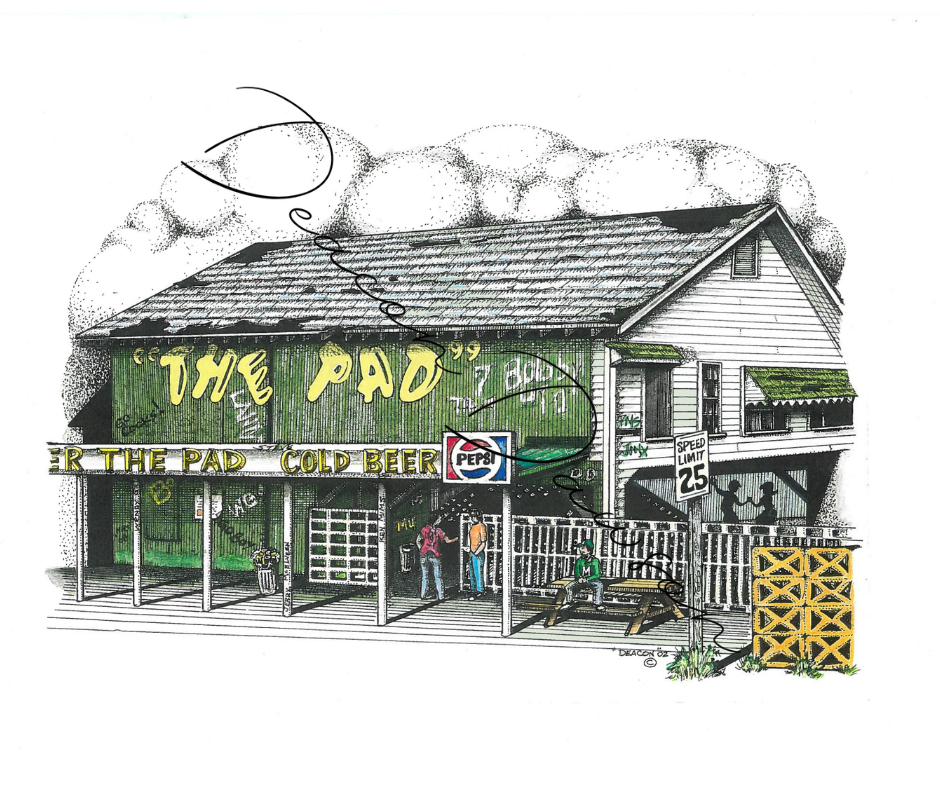
Why do Grand Strand fans still want a print of The Pad? Deacon Dawson’s hand-signed pen-and-ink print remembers the Ocean Drive, North Myrtle Beach beach house that became a second home to shaggers, lifeguards, and a rowdy college crowd. The drawing brings back the loose, lived-in spirit of a place people never forgot.
What was it like to visit The Pad in Ocean Drive?
The Pad stood at 84 S. Ocean Boulevard during Ocean Drive’s Baby Boomer heyday, and its appeal was not polish. Sketched as it looked in the 1960s, The Pad was a graffiti-covered, delightfully dilapidated former beach house with the kind of look that told newcomers they had arrived somewhere with stories already in progress.
People came from the sand, from work, from nearby rooms, and from wherever beach music was calling. Shaggers had space to gather, lifeguards had a familiar stop, and college kids found the rowdier side of an Ocean Drive night. The crowd was part of the architecture: sun-faded, casual, noisy, and ready to stay a while.
That is why memories of The Pad tend to come with a feeling rather than a formal description. For many people, the place means a certain stretch of Ocean Boulevard, friends who knew where to meet, and the easy understanding that a beach town could have its own rules after dark.
Why was The Pad important to beach music and shag fans?
The Pad was widely known as a Shag club, and Harold Bessent, its popular “Grand Poopah,” is credited with helping make it one of the Southeast Coast’s most famous spots for babes, beer, and beach music. Those words are part of the legend, but the deeper point is simple: The Pad gave people a home base for the social life around the dance.
Shag is as much about community as steps. A favorite club becomes a place where regulars return, visitors learn the rhythm of the room, and one good song can keep a conversation going long after the record ends. The Pad belongs in the remembered map of Ocean Drive because it held that kind of energy.
Even readers who never walked through its door may recognize the appeal. Every beach community has buildings that seem to collect the voices, music, and mischief of an era; The Pad is one of those buildings for North Myrtle Beach. Its weathered appearance was not separate from the story—it was part of why the story felt real.
Why choose a Deacon Dawson print of The Pad?
A photograph can document a building, but a pen-and-ink drawing asks the eye to linger on its character. In The Pad, Deacon Dawson concentrates the porch, angles, signs of wear, and unmistakable personality of the old beach house into a landmark image made for people who carry Ocean Drive with them.
Deacon Dawson calls South Carolina’s Grand Strand home, and his pen-and-ink reminders focus on landmark structures, past and present. He arrived in Myrtle Beach in 1968, and his work is rooted in the places and local stories that make the coast feel personal rather than generic. Every print is hand-signed by Deacon Dawson.
The Pad print works especially well for someone who danced, worked the beach, spent summers nearby, or simply learned to love the history behind Ocean Drive’s shag culture. Hang it where stories naturally start: near a record collection, in a den, over a bar cart, beside beach photographs, or on a wall that needs a little more South Carolina character.
Which other Grand Strand club and restaurant prints pair with The Pad?
A wall of Grand Strand landmarks does not need to follow one exact decade or neighborhood. It can follow the places that people mention without being prompted—the clubs, restaurants, and corners where a vacation became a tradition. The Pad has particularly good company in two other Deacon Dawson prints that hold on to North Strand and Myrtle Beach nightlife and gathering-place memories.
Sonny’s Pavilion recalls the North Strand beer-and-boogie destination created when Dr. N. F. “Sonny” Nixon moved and converted a simple gazebo. A Wurlitzer jukebox, dance floor, and no midnight curfews made a difference, and after Hurricane Hazel halted the party in 1954, Sonny’s Pavilion was rebuilt on the same spot the following spring. For shag fans, Sonny’s Pavilion and The Pad make a natural pairing: two remembered places connected to music, movement, and the people who showed up for both.
Sloppy Joe’s brings a different kind of Myrtle Beach memory to the wall. Located at 9th Avenue North and Ocean Boulevard, where Ripley’s Believe It or Not now stands, the eatery and Bingo Hall fed people around the clock and became known for the line, “We may Doze, But Never Close!” Pairing Sloppy Joe’s with The Pad creates a fuller coastal scene: late-night food, familiar street corners, beach music, and the stops that made a night out feel complete.
These are not anonymous beach buildings. The Pad, Sonny’s Pavilion, and Sloppy Joe’s each suggest a different reason people gather—dance, food, conversation, and the chance of running into somebody they know. Together, the hand-signed pen-and-ink prints make room for a Grand Strand story that is lively, specific, and worth retelling.
Shop The Pad, Sonny’s Pavilion, and Sloppy Joe’s to bring a little of that Grand Strand conversation home.
Common questions
Where was The Pad located?
The Pad was located at 84 S. Ocean Boulevard in the Ocean Drive section of North Myrtle Beach, South Carolina. Deacon Dawson’s print sketches the former beach house as it looked in the 1960s.
Is The Pad print connected to shag and beach music history?
Yes. The Pad became a well-known gathering place for shaggers, lifeguards, and college crowds, and it was closely associated with beach music and Shag culture in Ocean Drive.
Are Deacon Dawson landmark prints hand-signed?
Yes. Every Deacon Dawson Grand Strand print is hand-signed by the artist, including the prints of The Pad, Sonny’s Pavilion, and Sloppy Joe’s.